

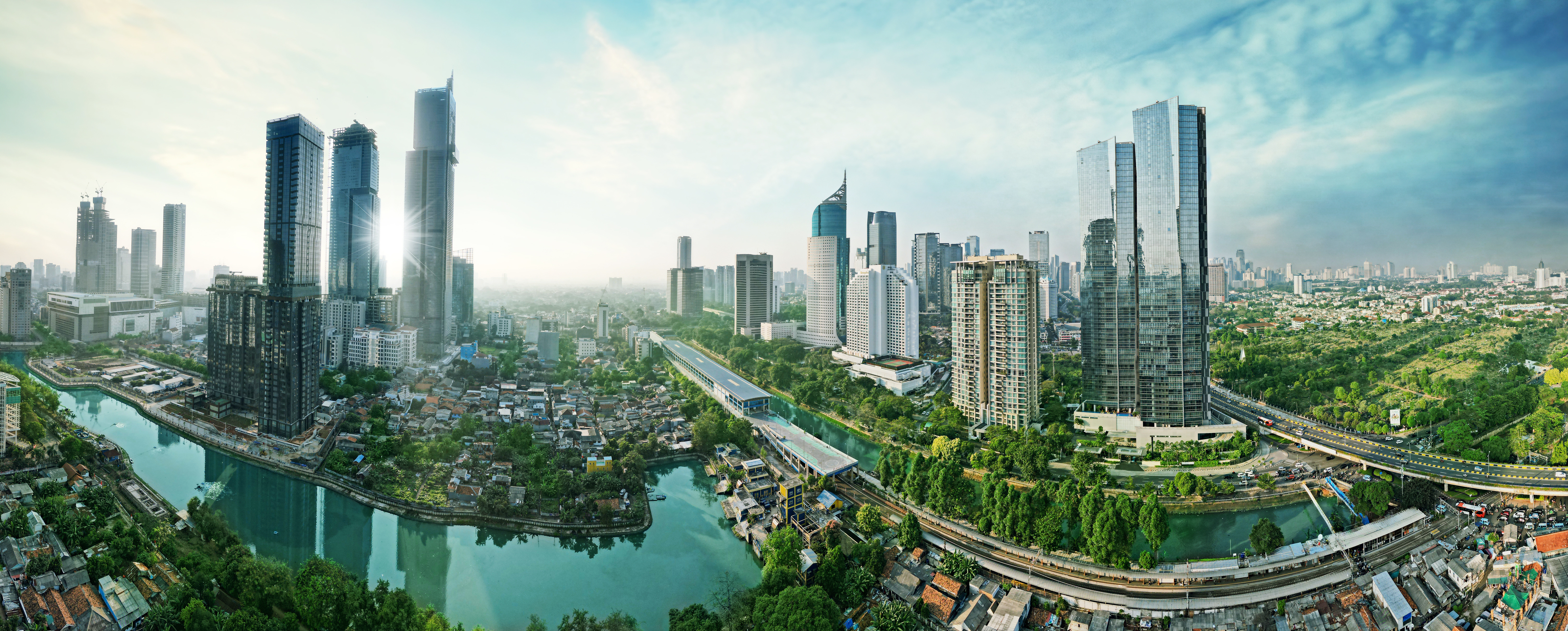
Introduction: Indonesia’s Strategic Pivot
Looking at the Indonesian economy in early 2026, there is a visible and intensifying paradox: the nation sits on the world’s most critical maritime “chokepoints,” yet it often struggles to move its own goods efficiently across its 17,000 islands. For decades, Indonesia was content being a commodity giant, shipping out raw coal and nickel. Today, that is changing. Jakarta is attempting a massive strategic pivot, trying to transform the country into a sophisticated regional logistics and manufacturing hub that can compete with the likes of Vietnam and Thailand (World Bank Indonesia Economic Prospect, 2024).
The ambition is clear in the “downstreaming” policies and the hundreds of national strategic projects currently underway. In theory, Indonesia’s massive domestic market and control over the Malacca, Sunda, and Lombok straits should make it the natural successor to China for “China+1” investment strategies. However, the physical reality of an archipelagic nation creates massive structural bottlenecks. High shipping costs and a fragmented regulatory landscape mean that geography alone isn’t enough to guarantee success (IMF Article IV Consultation, 2024; BKPM Investment Report, 2025).
Ultimately, this analysis asks if Indonesia can actually translate its recent reforms into a lasting “hub” status. This is a high-stakes gamble. As the U.S. and China continue to fragment global trade, Indonesia is trying to position itself as a neutral, indispensable middle-ground. Whether it becomes a true regional engine or remains a “market of potential” depends on its ability to fix internal execution gaps and maintain investor confidence in its legal frameworks (UNCTAD World Investment Report, 2024; ASEAN Secretariat Trade Review, 2025).

Logistics Infrastructure: Ports, Corridors, and Connectivity
Indonesia is currently playing a high-stakes game of geographical Tetris. With over 17,000 islands to stitch together, the government’s “Golden Vision 2045” rests almost entirely on whether it can turn a fragmented archipelago into a seamless conveyor belt for global trade. The results so far are a mix of breakneck construction and stubborn bottlenecks. While the physical landscape is being rewired at an unprecedented pace, the efficiency of that wiring remains a point of contention.
Maritime Gateway Development
The maritime sector is the obvious centerpiece. Tanjung Priok in Jakarta remains the undisputed heavyweight, handling over 7 million TEUs annually and posting a 5.7% throughput increase as of late 2025 [Shipping Gazette, 2025]. However, Priok’s chronic congestion has forced a strategic pivot. The 2024 completion of the Patimban Deep Sea Port in West Java—a $3 billion terminal—was designed specifically to bleed off excess traffic and serve as a dedicated export hub for the automotive sector [PWC Indonesia, 2025].
Further west, the Kuala Tanjung port in North Sumatra is being groomed as a direct competitor to the Malacca Strait hubs of Singapore and Malaysia. Yet, despite these “hard” infrastructure wins, Indonesia’s “soft” logistics performance has seen a surprising dip. In the 2023 Logistics Performance Index (LPI), Indonesia fell 17 spots to 63rd globally, primarily due to failures in “timeliness” and “tracking and tracing” [World Bank LPI, 2023]. This highlights a critical reality: building the port is only half the battle; the digital and bureaucratic tissue connecting them is still lagging.
Land and Rail Corridors
On land, the priority has shifted to massive arterial projects. The Trans-Sumatra Toll Road (JTTS), a 2,700-km spine connecting Aceh to Lampung, is already altering regional trade patterns by slashing travel times by up to 50% in key sections [Hutama Karya, 2025]. In Java, the focus is on “de-bottlenecking” urban centers. The expansion of the Jakarta MRT (Phase 2) and the operationalization of the Greater Jakarta LRT reflect a broader push to reduce the $5 billion annual productivity loss caused by traffic [KPMG Investing in Indonesia, 2025].
However, the price tag is staggering. The Ministry of Finance estimates that Indonesia needs approximately $625 billion (Rp 10,000 trillion) for infrastructure through 2029. Crucially, the state budget can only cover about 40% of this, leaving a massive 60% gap to be filled by the private sector and foreign investors [Ministry of Finance, 2025].
Digital Infrastructure
The final piece of the puzzle is “invisible” infrastructure. The Palapa Ring—a 35,000-km fiber optic backbone—has finally reached the country’s outermost regions, providing the necessary plumbing for a digital economy [Trade.gov, 2025]. This has triggered an explosion in the data center market, with the first National Data Center (PDN) in Cikarang beginning operations in June 2025. Major players like AWS, Google, and Alibaba are doubling down on Jakarta, viewing it as the primary digital vault for Southeast Asia [World Bank, 2025].
“The state budget can only fund 23% of our infrastructure needs through 2029. The remaining 60% must come from private sector participation and innovative financing. We must build smarter, not just bigger.”
— Sri Mulyani Indrawati, Minister of Finance, 2025

Investment Regimes: SEZs, Incentives, and Competitiveness
The Indonesian government’s strategy to bypass the “middle-income trap” is increasingly centered on a series of specialized enclaves designed to shield investors from the country’s broader bureaucratic friction. By early 2026, the proliferation of Special Economic Zones (SEZs) has become the primary laboratory for Jakarta’s most aggressive market-friendly experiments. These zones are not just physical industrial parks; they are legal “bubbles” where the usual rules of Indonesian business are suspended in favor of international standards [BKPM Investment Report, 2025].
Special Economic Zones (SEZs)
Indonesia has significantly ramped up its SEZ program, expanding to 24 operational zones by 2025, with several more in the pipeline focusing on high-tech and green energy [Jakarta Globe, 2025]. The performance metrics are telling: in 2024 alone, SEZs attracted approximately Rp 90.1 trillion ($5.5 billion) in new investment and created nearly 48,000 jobs [National Council for SEZs, 2025]. Key hubs like Morowali (nickel) and Sei Mangkei (palm oil) offer a potent mix of fiscal carrots—including tax holidays of up to 20 years and 80-year land concessions—that are starting to tilt the scales against regional competitors [State Department Investment Climate Statement, 2025]. However, the model remains uneven; while resource-rich zones in Eastern Indonesia are booming, tourism and digital zones have struggled to match that pace, highlighting a dependency on “hard” industrial outputs rather than services [World Bank Indonesia Economic Prospect, 2024].
Investment Coordination and Deregulation
The administrative architecture of investment has also undergone a digital facelift. The transition to the Risk-Based Online Single Submission (OSS) system, further refined by Government Regulation 28/2025, has attempted to automate the licensing process. A particularly radical shift is the “tacit approval” (fiktif positif) mechanism, where a license is automatically granted if the government fails to respond within a set timeframe [Makarim & Taira, 2025]. Furthermore, Presidential Regulation 10/2021—often called the “Positive Investment List”—has flipped the script on foreign ownership. By 2025, hundreds of sectors previously restricted or capped are now 100% open to foreign capital, including healthcare and telecommunications [UNCTAD World Investment Report, 2025]. Despite this, “technical” regulations from individual ministries still frequently conflict with central directives, creating a “two steps forward, one step back” dynamic for investors on the ground [OECD Report on Infrastructure Investment, 2025].
Downstreaming Policy (Hilirisasi)
The most controversial and successful pillar of the current regime is Hilirisasi, or downstreaming. The 2020 ban on nickel ore exports was a blunt-force industrial tool that forced global giants to build smelters in Indonesia rather than shipping raw material to China. By 2025, this has evolved into a full-scale EV battery ecosystem. Major players like LG Energy Solution and Hyundai have operationalized battery cell plants in Karawang, while BYD committed $1 billion to a 150,000-unit factory in West Java in late 2024 [CELIOS Energy Transition Report, 2025]. This policy has successfully captured more value-added revenue domestically, with nickel-related exports surging. However, the heavy reliance on Chinese capital for these smelters—and the coal-fired power plants that run them—has raised “ESG” (Environmental, Social, and Governance) red flags that may eventually limit the finished products’ access to European and U.S. markets [UNCTAD, 2025; Nagantara Foundation, 2025].
U.S. Trade Policy and Supply Chain Reconfiguration
Indonesia’s role in the global supply chain is being reshaped not by direct trade wars, but by the quiet, massive movement of capital trying to stay one step ahead of them. In early 2026, it is clear that Jakarta has successfully navigated the “de-risking” wave, positioning itself as a neutral safe haven while maintaining its status as a critical supplier of green transition materials. The impact of U.S. policy on Indonesia is less about specific tariffs and more about how Washington’s pressure on China creates a vacuum that Indonesia is eager to fill.
Direct Exposure Limited
Historically, Indonesia has maintained a “non-aligned” trade profile, which has shielded it from the most aggressive U.S. protectionist measures. Total goods and services trade with the U.S. reached a record $42.9 billion in 2024, up 5.2% from the previous year, driven largely by a surge in exports of electrical machinery and textiles [USTR Indonesia Trade Summary, 2024]. While Indonesia technically “graduated” from the U.S. Generalized System of Preferences (GSP) after reaching upper-middle-income status, the blow was softened by the 2025 U.S.-Indonesia Trade Deal. This partial agreement removed significant non-tariff barriers and secured market access for Indonesian aerospace and digital services, effectively preventing the 32% blanket tariffs that once loomed over non-treaty partners [Financial Times / GTAIC, 2025].
Indirect Effects: The “China+1” Competition
The real story lies in trade diversion. As U.S. tariffs make “Made in China” increasingly expensive, Chinese manufacturers are aggressively relocating to ASEAN. Indonesia is currently locked in a fierce battle with Vietnam and Mexico to capture this “China+1” investment. By mid-2025, U.S. imports from Indonesia had surged by nearly 50% year-on-year, reflecting a massive reconfiguration of supply chains in the electronics and automotive sectors [GTAIC Strategic Import Trends, 2025].
Indonesia’s unique advantage is its “backward integration” strategy. By banning raw nickel exports and forcing domestic processing, Indonesia has made itself the indispensable upstream supplier for the global EV battery market. However, this creates a complex “rules of origin” puzzle. Under the Regional Comprehensive Economic Partnership (RCEP), Indonesian goods can use a high percentage of Chinese components and still qualify for preferential regional tariffs, but meeting the stricter U.S. “Inflation Reduction Act” (IRA) requirements for EV tax credits remains a significant hurdle for Indonesian-made batteries [AMRO Global Value Chain Report, 2025; UNCTAD, 2025].
Investor Sentiment and Global Rates
Investor confidence in Indonesia remains “broadly resilient” as of the January 2026 IMF assessment. The Federal Reserve’s pivot to rate cuts in late 2025—bringing the benchmark range down to 3.75%–4.00%—has triggered a revival in capital inflows into Indonesian equities and bonds [IMF Article IV Consultation, 2026; BRIDS Economic Outlook, 2025]. However, there is a lingering “wait-and-see” mood. Investors are closely watching the implementation of President Prabowo’s budget priorities and the potential for new U.S. trade restrictions following the 2024 election cycle. While Indonesia offers attractive yields and a stable 5.0% growth rate, its “protectionist” leanings in the mining sector continue to weigh on long-term sentiment among Western capital groups [State Department Investment Climate Statement, 2025; IMF Staff Report, 2026].
“Indonesia is a secondary beneficiary of U.S.-China tensions, but it must compete with Vietnam and Mexico for capital that might otherwise go to China. The win is not guaranteed; it must be earned through regulatory clarity.”
— Helmy Kristanto, Chief Economist, 2025
ASEAN Integration and Regional Cooperation
Indonesia’s role as the de facto leader of Southeast Asia is currently being tested by the “Epicentrum of Growth” narrative it championed during its 2023 ASEAN chairmanship. While the rhetoric of regional unity is high, the reality on the ground in early 2026 is a complex tug-of-war between deeper integration and national protectionism. Jakarta’s success as a logistics hub depends on whether it can turn the ten-nation bloc into a truly seamless market or if it will remain a collection of competing industrial islands.
Trade Architecture: Beyond Tariffs
The regional trade landscape reached a critical turning point in late 2025. With the ATIGA Upgrade finalized and signed at the 47th ASEAN Summit in October, the focus has shifted from simple tariff elimination—which now covers 98.89% of intra-ASEAN goods—to “modern” trade issues like digital economy provisions and supply chain resilience. This synchronization is essential for the Regional Comprehensive Economic Partnership (RCEP) to function effectively. By harmonizing rules of origin across 15 nations, RCEP is projected to add $160 billion to the region’s GDP by 2035, effectively positioning Indonesia as the southern anchor of a massive East Asian value chain.
Connectivity and Institutional Friction
Physical infrastructure is only as good as the bureaucracy that manages it. Under the Master Plan on ASEAN Connectivity (MPAC) 2025, Indonesia has prioritized the full operationalization of the ASEAN Single Window (ASW) and the ASEAN Customs Transit System (ACTS). These tools are designed to slash the time goods spend sitting at borders, yet “institutional connectivity” continues to lag significantly behind “physical connectivity,” creating a bottleneck for the very ports Indonesia has spent billions to build.
The Persistence of Non-Tariff Barriers
The most significant headwind remains the proliferation of Non-Tariff Barriers (NTBs). Intra-ASEAN trade still accounts for only ~22% of the bloc’s total trade, a figure that has remained stubbornly stagnant for over a decade. The IMF notes that reducing these “invisible” costs could boost regional GDP by an additional 4.3%. For Indonesia, this is the ultimate strategic dilemma: it seeks regional integration to boost its exports, but its own domestic “hilirisasi” (downstreaming) policies often involve the very protectionist measures that ASEAN’s blueprints aim to dismantle.
Bottlenecks and Constraints: Structural Friction and the Financing Gap
While Indonesia’s “Golden Vision 2045” remains the north star for policymakers, the road to high-income status is obstructed by persistent structural hurdles that threaten to dampen investor enthusiasm. By early 2026, the euphoria surrounding the Omnibus Law has been tempered by a pragmatic realization: legislative reform on paper often struggles with the inertia of local bureaucracy and judicial pushback.
Regulatory Friction and Labor Tensions
Legal certainty remains a lingering country risk for many long-term investors. Despite the landmark Job Creation Law (Omnibus Law), the Indonesian Constitutional Court’s late-2025 mandate for a substantive revision of labor regulations has reintroduced a cloud of uncertainty over severance pay, outsourcing, and contract flexibility. Furthermore, land acquisition continues to be the single largest “soft” bottleneck for “hard” infrastructure development. The World Bank estimates that delays in securing titles for road, rail, and energy projects impose a macroeconomic cost of between $5 billion and $10 billion annually, effectively acting as a hidden tax on national growth.
The Logistics Trap: Ports and Inter-Island Costs
Indonesia’s geographic blessing—its 17,000 islands—is also its greatest logistics challenge. While port hardware has modernized, the “soft” infrastructure of customs and digital clearance continues to lag regional peers. As of early 2026, average dwell times at Tanjung Priok remain stubbornly high at 2.8–3.5 days, significantly trailing Singapore’s sub-2-day efficiency. High shipping costs between the eastern and western provinces mean that it is often cheaper to ship a container from Shanghai to Jakarta than from Jakarta to Jayapura, effectively balkanizing the domestic market and limiting the reach of the “Maritime Fulcrum” strategy.
The Financing Wall and Fiscal Space
The most daunting constraint is the massive capital requirement for the next phase of growth. The Ministry of Public Works projects an infrastructure funding gap of Rp 753 trillion (approx. $47 billion) for the 2025–2029 period, a deficit that the state budget (APBN) cannot cover alone. With a revenue-to-GDP ratio hovering at a modest 13.7%, Indonesia’s fiscal space is tightly constrained by rising energy subsidies and debt servicing costs. Unless Jakarta can successfully transition from SOE-led development to a more robust Public-Private Partnership (PPP) model, many ambitious targets for the green energy transition and smart-city expansion will remain unfunded blueprints.
“ASEAN is at a crossroads. We have eliminated the tariffs, but the next 4.3% of growth will only come from dismantling the non-tariff walls that still separate our markets.”
— Kristalina Georgieva, Managing Director of the IMF, October 2025
Conclusion: Hub Potential vs. Execution Reality
Indonesia stands at a definitive crossroads in its ambition to become the primary southern logistics hub of the Indo-Pacific. The central paradox, much like other frontier markets, is the tension between world-class “hardware” and a lagging “software” update. On one hand, the physical transformation—symbolized by the Trans-Java toll roads, modernized ports, and the burgeoning “hilirisasi” industrial clusters—has created tangible assets that are now attracting record FDI. On the other hand, the “invisible walls” of regulatory inconsistency, high logistics costs (ranking 61st in the World Bank LPI), and a massive infrastructure financing gap of approximately $47 billion through 2029 threaten to stall this momentum.
The next 3–5 years represent a unique, time-sensitive window. As global supply chains “de-risk” away from China, Indonesia offers a neutral, resource-rich alternative. However, the victory is not guaranteed; Jakarta is in a direct race against faster-reforming regional peers like Vietnam and Mexico. Ultimately, Indonesia’s transition from a “market of potential” to a “global hub” will depend on whether it can match its physical ambitions with the institutional transparency required by international capital. The hardware is ready; the success of the project now rests entirely on the quality of the governance.
By Mohammed Ali Labchah
Photo: stock adobe.com, Naufal Farras / CC BY-SA 4.0, stock.adobe.com
